For the same open model, an API costs less than your own GPU until your volume would keep that GPU busy most of the month. Above that point, a rented GPU costs less on paper, but only if it can process all those tokens. A card you buy needs the same volume, kept up for years, to pay back its price.
The charts below work out the break-even point from this week's prices for one model, Apertus 70B. They price it three ways: per token through Infomaniak's API, by the month on Unihost's H100 server and by the hour on UpCloud's. Every assumption is listed in a table at the end.
In our view, cost is rarely the best reason to run your own model. Privacy and control usually matter more, as the section on other reasons explains.
Who this is for
- you call an open model through an API and wonder whether a GPU of your own would cost less
- you are choosing between renting a GPU by the hour, renting one by the month and buying a card
- you want the sums laid out, with every assumption shown
Not for you if you have not chosen a model yet: start with where to run an open-source LLM, which matches model sizes to hardware.
Key numbers
- 72 billion parameters in Apertus 70B, the open model this guide prices three ways Official page,
- 40.5 GB its weights at 4-bit, small enough for one 80 GB H100 with room for conversations Our calculation,
- 2.6 million seconds in a 730-hour month: tokens per second times 2.6 million gives tokens a month Our calculation,
- 575 W rated power of one RTX 5090; holding the same model at 4-bit takes two of them Official page,
Compare the same model at the same precision, or the sums mean little
Several comparisons we read set a rented GPU running an open model against the API of a much larger closed model. That answers a different question. A fair test keeps three things the same: the model, the precision it runs at and the amount of text it handles.
We use Apertus 70B (Apertus-v1.5-70B) throughout. One provider we cover sells it by the token, and anyone can download the same weights after accepting its licence. It is published on Hugging Face by swiss-ai under the Apache 2.0 licence. Its page counts about 72 billion parameters, stored at 16-bit.
Precision is the catch. By the rule in our GPU memory guide, the weights take about 144 GB at 16-bit, 72 GB at 8-bit and 40.5 GB at 4-bit. That guide keeps 10% of each card free as working space. At 8-bit, the weights alone would fill the rest of an 80 GB card. One H100 therefore runs the model at 4-bit, which is called quantisation.
Compressing a model to 4-bit can cost some answer quality, and how much depends on the model and the method. Check which precision an API serves before you compare answer quality as well as cost.
What each option really costs
The three options charge for different things, which is why the cheapest one changes as your volume grows.
An API: you pay for tokens, so the bill follows your volume
An API charges per million tokens, the short pieces of text a model reads and writes. Input tokens, the ones you send, and output tokens, the ones it writes back, have separate prices. Infomaniak charges €0.70 in / €2.50 out per million tokens (checked 25 October 2026) for Apertus 70B, served from its data centres in Switzerland.
Output costs more there, and NVIDIA's guide to inference explains the difference in work. A model reads the whole input in parallel but writes its answer one token at a time. So the mix of input and output changes the bill. Our charts assume that one token in five is output, our own assumption for an assistant that reads more than it writes.
A rented GPU: you pay for time, busy or idle
A GPU server costs the same whether it writes one token or a billion. You pay for every hour it runs, or a fixed fee for the month. The only way to lower its cost per token is to keep it busy with many requests at once. Serving software such as vLLM is built for this: its documentation lists continuous batching of incoming requests.
Unihost rents its LWG-G13 server, a dedicated machine with one H100, for €1,658.90 a month (checked 25 October 2026), with a one-month minimum. UpCloud rents one H100 SXM by the hour for €2.17 an hour (about €1,458 a month, with a 28-day monthly cap; checked 25 October 2026). It bills each started hour and caps the monthly charge at 28 days of use.
Monthly costs for hourly prices assume the server runs all month (730 hours), or less where a provider caps the monthly bill.
| Plan | Price | New-customer offer | Link |
|---|---|---|---|
| Unihost LWG-G13, H100 80 GB GPU | €1,658.90/month monthly, paid in advance; minimum one month; plus a one-off set-up fee of €36.90 checked 25 Oct 2026 | No offer | Visit |
| UpCloud GPU Server, 1 x NVIDIA H100, 12 cores, 240 GB 80 GB GPU | €2.17/hour (about €1,458/month; no charge after 28 days of use)30-day month: the last 2 days are free.31-day month: the last 3 days are free.February: no free days (one in a leap year).Started mid-month: it may never reach the cap that month. on demand, billed by the starting hour; monthly cost capped at 28 days of use checked 25 Oct 2026 | No offer | Visit |
Both prices are in euros. Unihost also charges a one-off set-up fee, shown with its price.
Your own card: you pay up front, then for power and your time
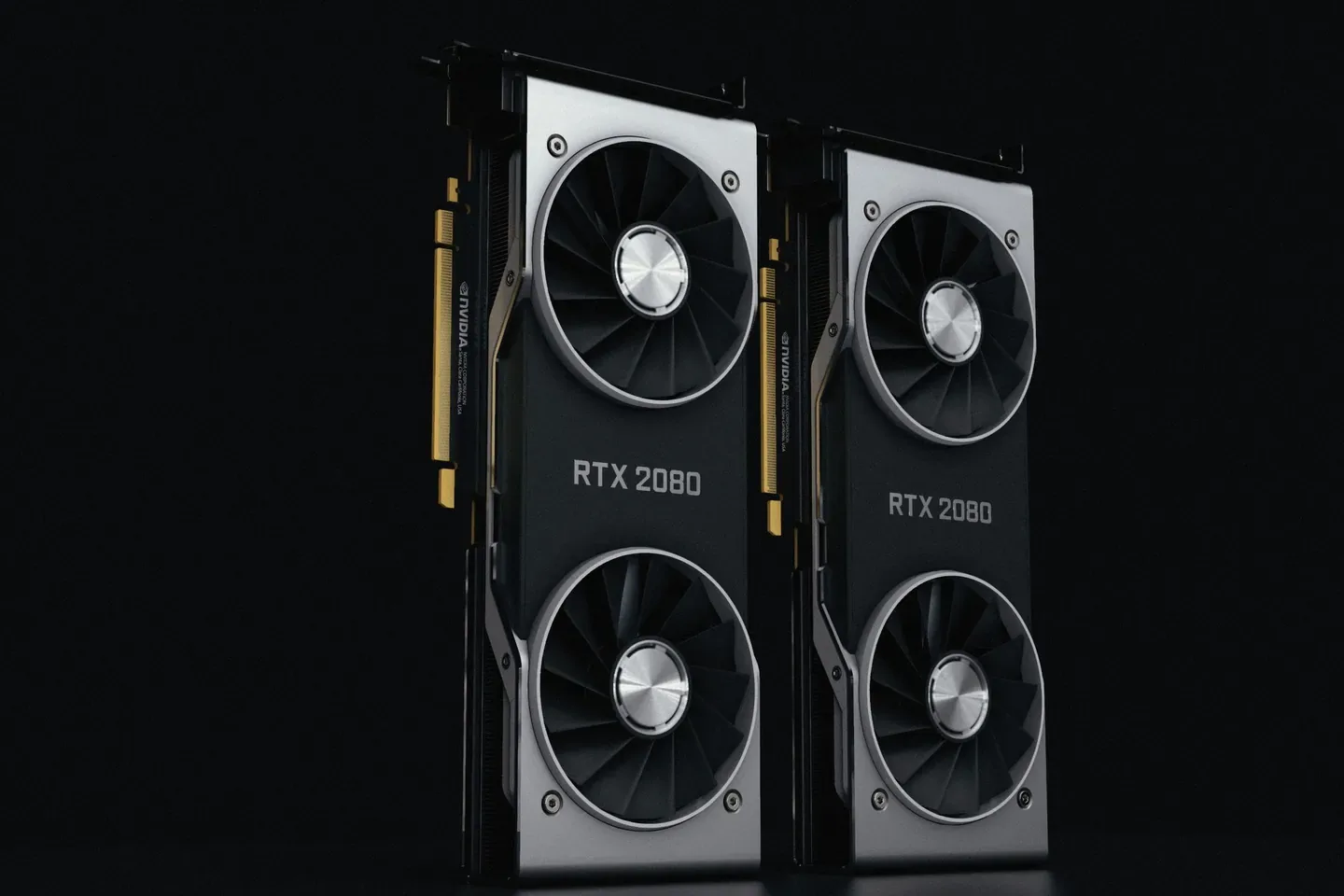
A card you buy has no rental bill. Its cost per month is the purchase price spread over the months you expect to use it, plus electricity, plus the computer around it. One RTX 5090 has 32 GB of memory, so Apertus 70B at 4-bit needs two, with a combined rated power of 1,150 W.
Two RTX 5090 cards running all month at their full rated power use about 840 kWh, before the rest of the computer.
| Hours of use | One RTX 4090 (450 W) | One RTX 5090 (575 W) | Two RTX 5090 cards (1,150 W) |
|---|---|---|---|
| 4 hours a day (about 122 hours) | 55 kWh | 70 kWh | 140 kWh |
| 8 hours a day (about 243 hours) | 110 kWh | 140 kWh | 280 kWh |
| All month (730 hours) | 329 kWh | 420 kWh | 840 kWh |
Multiply the figure that matches your use by your own price per kWh. Rated power is the most a card draws, so a card waiting between requests uses less. The processor and the rest of the computer add more. NVIDIA asks for a 1,000 W power supply for a computer with one RTX 5090.
Your time counts as well. With your own hardware, you install the drivers, update the software, secure the machine and repair it when something fails.
Where the API stops being the cheaper choice
The chart sets Infomaniak's API price for Apertus 70B against Unihost's monthly H100 server, which runs the same model at 4-bit. The API's line rises with every million tokens, while the server's line stays flat. Where they cross, both cost the same, and above that volume the server is cheaper on paper.
| Million tokens in a month | Infomaniak AI Services: swiss-ai/Apertus-v1.5-70B | Unihost LWG-G13, H100 |
|---|---|---|
| 0 | €0.00 | €1,658.90 |
| 1,000 | €1,060.00 | €1,658.90 |
| 1,565 (same cost) | €1,658.90 | €1,658.90 |
| 2,000 | €2,120.00 | €1,658.90 |
| 3,000 | €3,180.00 | €1,658.90 |
| 4,000 | €4,240.00 | €1,658.90 |
The server's line leaves out Unihost's one-off set-up fee. Both prices exclude VAT.
On paper is the important part. The server saves money only if it can process the break-even volume every month. A month of 730 hours has 2,628,000 seconds. So the server's average speed, day and night, must be at least the break-even volume divided by 2.6 million seconds.
At an average of 500 tokens per second, day and night, a server processes about 1.3 billion tokens a month.
| Average speed all month (tokens per second) | Tokens in a month |
|---|---|
| 100 | 263 million |
| 250 | 657 million |
| 500 | 1,314 million |
| 1,000 | 2,628 million |
| 2,000 | 5,256 million |
Compare the break-even point in the chart with this table. If the server would need a speed it cannot sustain, the API stays cheaper for every volume the server could handle. Speed depends on the model, the precision, the software and how many requests run at once. Reading input is also much faster than writing output, so measure the two separately.
A mixture-of-experts model still needs memory for every parameter
Mistral Small 4 (Mistral-Small-4-119B-2603) is a mixture of experts. According to its model card, only 6.5 billion of its 119 billion parameters work on each token. All 119 billion must still sit in memory. At 8-bit they take about 119 GB, which needs two 80 GB cards. Mistral also publishes a 4-bit version, about 67 GB by our rule, which fills most of one card.
Size the server by the full count, not by the active part. A server with two cards costs about twice as much as one. It therefore needs about twice the volume to break even against the same API price. Infomaniak sells this model by the token as well, for €0.20 in / €0.75 out per million tokens (checked 25 October 2026).
By the hour or by the month: when a monthly H100 pays off
Once you decide to rent, the next choice is how to pay. An hourly server suits work that runs part of the day, and a monthly server suits one that never stops. UpCloud caps its monthly charge at 28 days of use, which is 672 hours, so this chart counts a month as 672 hours.
A month is counted as 672 hours.
| Hours in a month | UpCloud GPU Server, 1 x NVIDIA H100, 12 cores, 240 GB | Unihost LWG-G13, H100 |
|---|---|---|
| 0 | €0.00 | €1,658.90 |
| 200 | €434.00 | €1,658.90 |
| 400 | €868.00 | €1,658.90 |
| 600 | €1,302.00 | €1,658.90 |
| 672 | €1,458.24 | €1,658.90 |
UpCloud bills each started hour. The monthly line leaves out Unihost's one-off set-up fee.
The two servers differ in more than billing. UpCloud's runs in Helsinki with 240 GB of RAM. Unihost's is a dedicated machine in Frankfurt with 192 GB, and its page names the card only as H100. NVIDIA's H100 page lists versions with 80 GB and 94 GB of memory, so either version holds the 4-bit model.
For a pair of H100 servers priced in US dollars, see the chart in our guide on where to run an open-source LLM.
Work out the break-even point for your own traffic
These five steps give the same answer for your own model and traffic:
- Count your tokens for a typical month, with input and output kept apart, from your API provider's usage records or your own logs.
- Work out the API's cost for that month: input tokens in millions times the input price, plus output tokens in millions times the output price.
- Take the server's cost for a month: its monthly price, or its hourly price times the hours it will run.
- Divide the server's cost by the API's cost per million tokens at your own mix of input and output. The result is the break-even volume in millions of tokens.
- Multiply the break-even volume in millions by 0.38. The result is the average speed, in tokens per second, that the server must keep up all month; check that it can.
Here is the second step for one example month of Apertus 70B through Infomaniak's API:
| What it is for | Plan and price | Amount | Cost | Link |
|---|---|---|---|---|
| Input, 800 million tokens | Infomaniak AI Services: swiss-ai/Apertus-v1.5-70B €0.70 / €2.50 per 1M tokens, input / output · pay as you go, no commitment; billed at the end of each month checked 25 Oct 2026 | 800 million input tokens | €560.00 | Visit |
| Output, 200 million tokens | Infomaniak AI Services: swiss-ai/Apertus-v1.5-70B €0.70 / €2.50 per 1M tokens, input / output · pay as you go, no commitment; billed at the end of each month checked 25 Oct 2026 | 200 million output tokens | €500.00 | Visit |
| Total | €1,060.00 | |||
The token counts are our example, not a measurement. Compare the total with the server prices in the box above.
Reasons other than cost to run your own model
Below the break-even volume, cost alone rarely justifies a GPU of your own. These reasons often do:
- privacy: prompts and documents stay on a machine you control, which helps when contracts or the GDPR limit where data may go
- control: you choose the exact model and version, and keep it for as long as you want
- independence: an API sets its own rate limits and can change its models or prices, while your own server answers only to you
- your own changes: you can run a model you have fine-tuned on your own data
Our guides to AI hosting in Europe and to fine-tuning or a document chatbot cover the first and the last of these in detail.
Rent by the hour before you buy cards or sign a long term
Buying cards is a bet that you will keep them busy for years. A few hours on a rented GPU show the real speed with your own model and traffic before you spend that money.
Run your prompts on an hourly H100 with the 4-bit model, with several requests at once, and note the tokens per second it keeps up. Put that figure into the fifth step. If a rented H100 cannot reach your break-even speed, a monthly server with the same card will not either.
If you are weighing two RTX 5090 cards of your own, GPU Mart rents a dedicated server with that pair. Its price is the monthly rate of a 24-month term, paid in advance, so it is a commitment rather than a trial. Set it against the price of two cards and the computer around them, spread over the same 24 months.
| Plan | Price | New-customer offer | Link |
|---|---|---|---|
| UpCloud GPU Server, 1 x NVIDIA H100, 12 cores, 240 GB 80 GB GPU | €2.17/hour (about €1,458/month; no charge after 28 days of use)30-day month: the last 2 days are free.31-day month: the last 3 days are free.February: no free days (one in a leap year).Started mid-month: it may never reach the cap that month. on demand, billed by the starting hour; monthly cost capped at 28 days of use checked 25 Oct 2026 | No offer | Visit |
| DigitalOcean GPU Droplet, 1 x NVIDIA H100 80 GB GPU | $4.41/hour (about $3,219/month) on demand, billed per second · VAT not stated checked 25 Oct 2026 | New accounts get a $5 credit that lasts 90 days and covers every product except SaaS add-ons checked 29 Oct 2026 | Visit |
| GPU Mart Enterprise Multi-GPU Dedicated Server - 2xRTX 5090 2× 32 GB GPUs | $859/month monthly rate of a 24-month term, paid in advance · VAT not stated checked 25 Oct 2026 | A free 24-hour trial of a VPS, dedicated or GPU server for new clients, on request checked 29 Oct 2026 | Visit |
UpCloud prices are in euros and the others in US dollars; we do not convert them. DigitalOcean bills by the second.
Every assumption, with its source
The charts and tables on this page rest on the figures below. Prices are the only figures that change from week to week.
Prices come from our weekly price records; every other figure was checked on 26 Oct 2026.
| Assumption | Value | Source | Checked |
|---|---|---|---|
| Model | Apertus-v1.5-70B: about 72 billion parameters, Apache 2.0 licence | its Hugging Face page | 26 Oct 2026 |
| Memory for the weights | 2 bytes a parameter at 16-bit, 1 at 8-bit and 0.5625 at 4-bit, with 10% of each card kept free | our GPU memory guide | 26 Oct 2026 |
| Precision on one H100 | 4-bit | our calculation from the two rows above | 26 Oct 2026 |
| API price | Infomaniak's input and output prices per million tokens, excluding VAT | our weekly price records | the date beside each price |
| Share of output tokens | 20% of all tokens | our assumption | 26 Oct 2026 |
| Monthly H100 | Unihost LWG-G13 with one H100, billed monthly, one-month minimum | our weekly price records | the date beside each price |
| Hourly H100 | UpCloud H100 SXM, billed by the started hour, at most 28 days a month | our weekly price records | the date beside each price |
| Length of a month | 730 hours (8,760 hours a year divided by 12), or 2,628,000 seconds; 672 hours at UpCloud | our calculation | 26 Oct 2026 |
| Power of a bought card | RTX 4090: 450 W; RTX 5090: 575 W (total graphics power) | NVIDIA's product pages | 26 Oct 2026 |
Mistakes to avoid
Comparing your own GPU with a larger closed model's API
Instead: Price the same model both ways, at the same precision.
Pricing only the input tokens of an API
Instead: Price the output tokens too, at their own rate and in your own proportion.
Assuming a rented GPU runs at full speed all month
Instead: Measure the speed it keeps up with your traffic, idle hours included.
Comparing a monthly price without its terms
Instead: Read the set-up fee and the minimum term under each price.
Pricing a bought card without its running costs
Instead: Add electricity at your own rate and the computer that holds the card.
Other questions
How much does it cost to run an LLM on my own computer?
On a computer you already own, the running cost is mainly electricity: the card's power for the hours it works, times your price per kWh. One RTX 5090 at its full rated power uses about 0.58 kWh an hour. The larger cost is the card itself, spread over the years you use it.
Is self-hosting an LLM worth it?
For cost alone, only when your volume stays above the break-even point and your server can keep up the speed that volume needs. For privacy or control, it can be worth it at any volume.
How many tokens can one GPU process in a month?
Multiply its average speed in tokens per second by 2.6 million, the number of seconds in a 730-hour month. At 500 tokens per second, that is about 1.3 billion tokens. The speed depends on the model, its precision, the software and how many requests run at once.
Why do output tokens cost more than input tokens?
A model reads the whole input in parallel but writes its output one token at a time, as NVIDIA's guide to inference explains. Writing takes more GPU time for each token, and Infomaniak, for one, prices output higher.
Sources and test notes
- Apertus-v1.5-70B model card on Hugging Face, read
- Mistral-Small-4-119B-2603 model card on Hugging Face, read
- Infomaniak AI Services prices, read
- UpCloud pricing (billing by the started hour, 28-day monthly cap), read
- NVIDIA GeForce RTX 5090 specifications, read
- NVIDIA GeForce RTX 4090 specifications, read
- NVIDIA H100 specifications, read
- NVIDIA technical blog: Mastering LLM Techniques: Inference Optimization, read
- vLLM documentation, read
We ran no test for this page. The model facts, power ratings and billing rules come from the official pages listed, read on 26 October 2026. Every price, and every figure worked out from a price, comes from our weekly price records and shows its own date.
Unihost's and GPU Mart's terms come from their order pages, which we do not link.